Not Just a Name on a Stone: How Our Pupils Are Researching the Village Memorial
Every November the same question lands in the staff room: how do you teach Remembrance to children who have never known a war fought close to home, in a village where the loudest thing on a Sunday morning is a tractor in a far field?
This year, Years 5 and 6 tried a different route in. Not a worksheet. Not a slideshow. A walk.
From the classroom to the village green
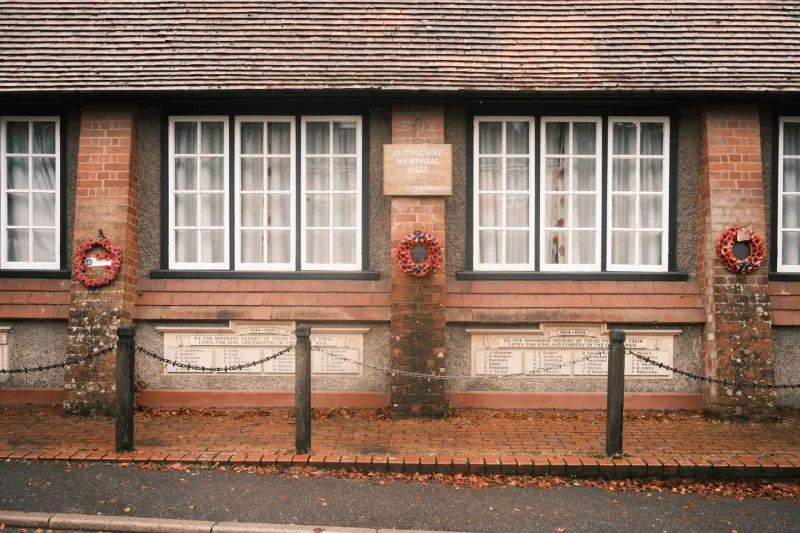
On a bright, cold Tuesday at the end of October, twenty-four pupils pulled on coats and set off down the lane to the memorial. Most of them had walked past it a hundred times. Very few had ever stopped to read it properly.
That was the whole point. Standing in front of the stone, the class was given a simple brief: pick a name, and find out who that person actually was. Not a date and a rank. A person, with a family, a street, a job, maybe a dog.
The silence that followed was, by all accounts, the longest the class has managed all term.
'He was somebody's brother'
Back in the classroom, the research began in earnest. Pairs of pupils worked through what the school could gather locally: parish records, old photographs, newspaper archives, and the memories of grandparents and neighbours who were happy to be quizzed over a cup of tea.
One pair discovered that their name belonged to a young man from a farm cottage who had been one of five brothers. Another found a family still living within a few miles of the village. A third traced a name to a household that appeared on the same census page as a great-grandparent of one of the pupils.
That last discovery caused something of a stir in the classroom.
'It changes how you read the stone,' said one Year 6 pupil. 'Before, it was just letters. Now I know he was somebody's brother and somebody's son, and he probably had a bike.'
Why a small school does this differently
In a school of our size, Remembrance is not an abstract national event. It is a local one. The names on the memorial are the names on the war memorial in the next village along, and the one after that. The surnames in the churchyard are the surnames in the register.
That makes the history unusually immediate. It also makes it unusually honest. Pupils quickly worked out that most of the men remembered on the stone were barely older than their own older siblings when they died, and that many never came home to the fields they grew up in.
Teachers were careful not to oversell the detective work. Some records simply do not exist, and a few names remain stubbornly mysterious. Rather than paper over that, the class talked about it: about why some lives leave more traces than others, and why that is worth noticing.
A display for the whole village
The results of all this digging will be on show this weekend. Families are invited to see the pupils' display in the run-up to the Remembrance Sunday service, with handwritten profiles, photographs, maps of where each family lived, and a large hand-drawn version of the memorial with the names picked out in poppy red.
The pupils have also put together a short booklet, printed in school, which will be left out for visitors. It is not a work of academic history — it is something better than that. It is a record of a class of nine, ten and eleven year-olds deciding that people who died more than a century ago still deserve to be looked up properly.
What happens on Sunday
Remembrance Sunday falls on 8 November this year, and as always the village will gather at the memorial for the act of remembrance, the laying of wreaths and the two-minute silence. Pupils from the school will be there, some of them carrying the poppies they have made in class, and some of them quietly hoping nobody asks them to read aloud.
Armistice Day falls on Wednesday 11 November, and the school will hold its own short act of remembrance, with the last post and a silence observed by the whole school in the playground.
Parents who have never been to either service are warmly encouraged to come along. It is not a long event. It is not a formal one. It is simply the village, standing still for a couple of minutes, in the company of the names it has chosen not to forget.
Small school, long memory
The project will not end with the weekend. The class's research is being added to a folder that will be handed on to next year's Year 5 and 6, so that the work keeps going rather than restarting from scratch each autumn.
There is something rather fitting about that. A memorial is only as good as the number of people who stop and read it. Eleven and twelve year-olds, it turns out, are excellent at stopping.
If you see a pupil squinting at the stone this week, notebook in hand, do say hello. They may well ask you a question about your own family. They are, by now, quite hard to put off.