Nine Hours Behind the Office Window: The Smallest Room With the Longest List
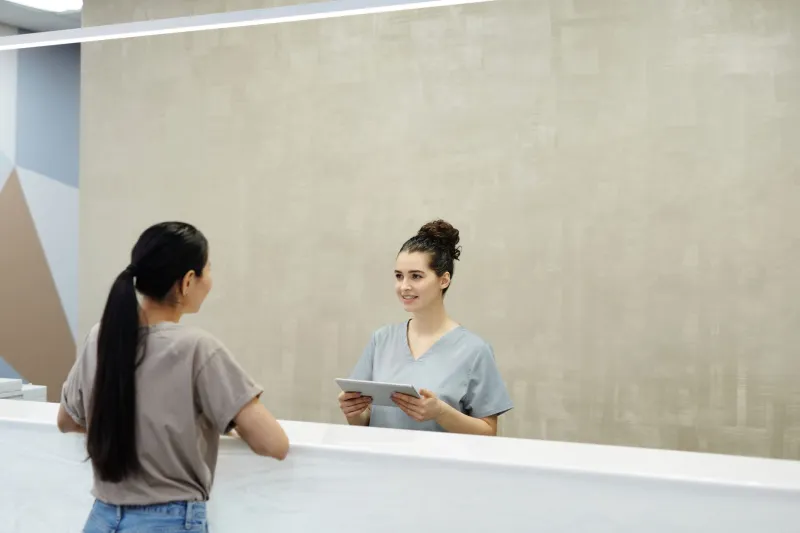
The office hatch slides open at about twenty past eight, and by twenty-one past there is already a queue. A parent holding a swimming kit and a half-eaten slice of toast. A Year 4 child with a letter that needed signing on Monday. A puddle-shaped trail of November drizzle working its way across the lino. Nobody in the room looks surprised, because nobody in the room is.
We were invited to sit in for a day with the team who run the school office at Walberton & Binsted — no small privilege, given that the room is roughly the size of a generous stationery cupboard and every square inch of it is doing something.
Before the window opens
Arrive at ten to eight and the place is already awake. Lights on, kettle on, two-way radios pulled off charge and tested one by one. The mobile that goes out on trips is checked. The answerphone is cleared. Somebody writes the date on the whiteboard, which sounds like a small thing until you realise how many conversations in a school day begin with "what's today?"
There is a folder for everything. Notices, trips, medical, the visitor signing-in book, the sheet of paper that records which child has gone home with which adult. The system is not fussy — it is load-bearing. As one member of the team put it, half the job is remembering things so that teachers do not have to.
The fifteen minutes that set the tone
Between 8:20 and 8:35 the hatch does more business than a village shop on a Saturday. A packed lunch that was left on the kitchen counter. A message about a dentist appointment at 11:15. A jumper retrieved from a hedge, still damp, faintly grassy. A quiet word from a parent about a worry that needs passing on before the register goes in.
What strikes you is the tone. Every enquiry gets the same steady, unbothered welcome, whether it is a lost plimsoll or something far heavier. The team are masters of the short, kind sentence: "Leave it with me." "I'll ring through now." "Don't worry, we'll sort it."
The lost property tide
By half nine, three unnamed items have arrived on the counter and none of them can be returned to anybody, because none of them say who they belong to. The office's feeling on this is not complicated. A name in a jumper is a jumper that comes home. A name in a water bottle is a water bottle that does not join the general drift towards the lost property box.
If you take one thing from this article, the team would probably like it to be the Sharpie.
Ten o'clock: the phone starts its shift
Somewhere around ten, the phone settles into its rhythm. A sick call. A late call. A question about whether the Year 6 trip needs a packed lunch or a school meal. A grandparent checking pick-up arrangements. A call from a supplier about a delivery that cannot get down the lane.
Handling a sick call is a skill in itself. There is a delicate line between being reassuring and asking the sensible question — is your child well enough for a full day, or would a lie-down and a drink of water do more good than a rush up the A27? The office asks it kindly, every time, because the answer matters for the child in front of them and for the rest of the class behind them.
The part that is not admin at all
Sitting in the corner, you start to notice something. A fair number of the conversations at that hatch are not about letters or lunch money. They are the ones where somebody has spotted that a child is not quite themselves, or where a family is having a tricky week, or where a small worry has been mentioned quietly and now needs to go to the right person immediately.
The office is often the first place a concern lands. The team will not talk about specifics — they can't, and they shouldn't — but they are clear that this is the part of the job that matters most, and the part that never quite leaves you at the end of the day.
Lunches, slips and the great permission-slip economy
Elsewhere in the day there is money to log, trip payments to tick off, dinner numbers to confirm and a stack of consent forms to chase. The office's line is gentle but firm: trips cannot run on goodwill alone, and a slip that comes back the same day saves three phone calls later in the week.
It is not glamorous. It is, however, the reason a coach turns up on time and a child with a dietary need gets the right plate at lunch.
Half past three, and the second rush
Then the gate crowd arrives, and with it a whole second shift: change of collection, a cousin collecting today instead, a note that needs to reach the class teacher before the door opens. The walkie-talkies crackle. Somebody checks the club list twice.
By four the corridors are quiet again and the office is doing the thing nobody sees — resetting for tomorrow. New notices out, registers filed, tomorrow's letters ready, the diary checked one last time. Then the lights go off, and the whole thing starts again in fourteen hours.
Small things that make a big difference
- Name everything. Jumpers, bottles, lunchboxes, coats. Ink, not hope.
- Ring before 8:30 if your child is unwell, so the register is right first time.
- Send slips back the same day. It genuinely does save a phone call.
- Tell us about collection changes by lunchtime, not at the gate.
- Keep non-urgent queries to the app or an email where you can — it keeps the phone free for the things that cannot wait.
- Say thank you occasionally. It lands harder than you'd think in a room that mostly hears what has gone wrong.
It is easy to walk past that window and see a hatch, a bell and a pile of paper. Spend a day behind it and you see something closer to the school's front desk, memory, switchboard and first-aider, all sharing one kettle. Quietly brilliant, and very much the heart of things here in Walberton and Binsted.