The 8:10 Convoy: A Week on the Walking Bus That Beats the School Run
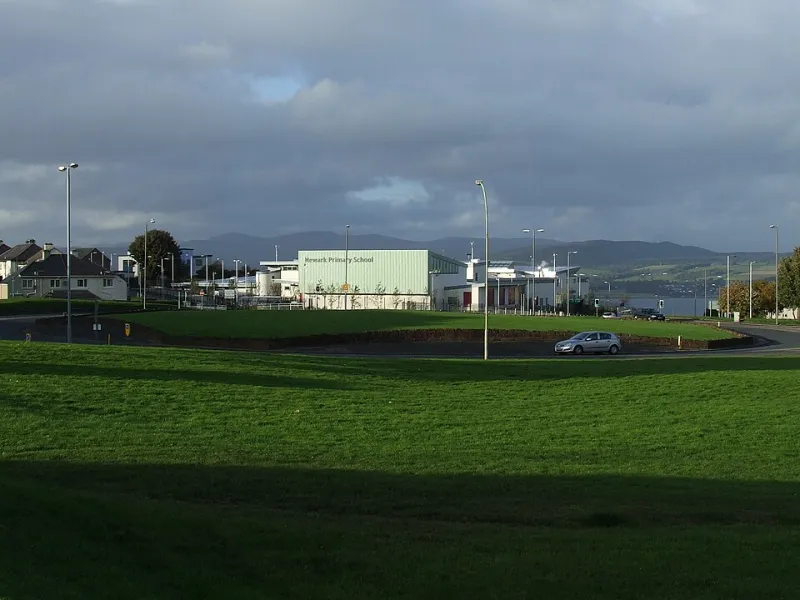
Photo: Thomas Nugent, CC BY-SA 3.0, via Wikimedia Commons
There is a particular kind of magic in a school run that does not involve reversing out of a tight space while someone behind you checks their watch. On the walking bus route that serves families in Walberton and Binsted, the magic is louder and much more chatty. It smells faintly of toast. It involves at least one debate about whether a dog counts as a pedestrian. And somehow, nine families have built a morning routine around it that feels less like logistics and more like a small, mobile village.
We spent a week on the route in autumn 2026 to see how it actually works. Not the polished version, but the real one: the hi-vis vests drying on radiators, the rainy-morning negotiations, the children who have become friends simply because they walk the same bit of pavement every day.
Monday: The Vest Basket and the First Hill
The meeting point is not a bus stop. It is a corner, a pushchair-friendly stretch and a growing pile of small people in brightly coloured coats. The volunteer 'driver' — the adult at the front — carries the register. The 'conductor' at the back carries the first aid kit, the spare gloves and a surprising amount of patience.
Monday is always the slowest. Shoes are still being tied. One child has brought a leaf collection in a sandwich bag and needs everyone to admire it. Another is convinced it will rain and has dressed for a fell expedition. We set off eight minutes late and still arrive with time to spare, which tells you something about how much slack the school run normally absorbs.
The first hill is the great divider. Some children sprint it. Some negotiate. Some stop to point out a cat in a window and the whole convoy pauses, briefly, to pay respects. This is not a route for people who need to hit a personal best. It is a route for people who like their mornings with a side of conversation.
Tuesday: Rain, Negotiation and the Spare Everything Bag
Tuesday is wet. Proper wet. The kind that makes you grateful for the spare-everything bag that lives on the conductor's shoulder. Spare socks. Spare pants for the smallest walkers. A spare snack for the child who has forgotten theirs and is watching everyone else with quiet despair.
The rainy-morning negotiation is its own art form. 'If we walk fast, we get there fast' is not as persuasive as you might think. 'If we walk fast, we get to the gate before the big puddle spreads' works better. We also learn that a walking bus is not a shuttle service. It is a group. The pace is set by the slowest pair of wellies, and that is not a flaw. It is the whole point.
By the time we reach the school gate, hoods are down, cheeks are pink and at least three children have discovered that walking in the rain is actually quite good fun when you are not being hurried. The adults look less convinced, but they are smiling too.
Wednesday: The Friendship Nobody Planned
Midweek is when you notice the friendships. Not the loud ones, but the pavement-level ones. The Year 2 child who now walks next to a Reception child because they both like the same gate. The two families who discovered they live three doors apart and had never really spoken. The parent who started walking because parking near school had become a daily argument with a stranger, and now has a standing chat about slow cookers on a Wednesday.
One of the volunteers tells me the route has changed the morning atmosphere more than any poster campaign could. 'It is hard to be cross at a car when you are holding someone's hand and talking about dinosaurs,' she says. 'The walking bus does not just reduce cars. It reduces the grumpy.'
Thursday: What Makes It Work
Ask the families and the answers are practical. It is free. It is regular. It has a clear route and a clear start time. Volunteers are known to the school, and the scheme is insured and risk-assessed. Children wear hi-vis. Adults know the crossings. The register means everyone knows who is expected and who has arrived.
But the less obvious answer is trust. The walking bus works because it is small enough to be personal. Nine families is not a franchise. It is a group of people who have agreed to look out for each other's children on a specific stretch of pavement. That is a fragile, valuable thing, and it needs more than enthusiasm to keep going.
Friday: Where It Still Needs Help
Here is the honest bit. The route is not full, but it is not fully staffed either. Volunteers are the limiting factor. A walking bus needs enough adults to be safe and enough backup for the mornings when someone is ill, away or stuck at work. At the moment, a small number of people are carrying a large share of the mornings. That is not sustainable, and everyone knows it.
The other gap is communication. Families who might benefit do not always know the route exists, or assume it is full, or worry that their child will be the only one who does not know anyone. None of those things are true. The route has space. The children are friendly. The adults are not auditioning for a reality show. They are just trying to get to the school gate without a parking row.
How to Join Without Overthinking It
If you are considering the walking bus, start small. Ask the school office for the current route and meeting point. Walk it once with your child before committing. Check whether your mornings actually fit the timetable, because a walking bus is only useful if it reduces stress rather than adding another deadline.
Talk to a volunteer. Ask the boring questions: what happens if it rains, what happens if we are late, what happens if my child needs the toilet halfway. The answers will tell you more than any leaflet. And if you can volunteer even one morning a week, say so. The scheme does not need heroes. It needs a rota with enough names on it.
On Friday, the convoy arrives at the gate and scatters with the usual mix of waves, forgotten lunchboxes and one child announcing that they have learned a new fact about hedgehogs. The pavement empties. The vests go back in the basket. Somewhere behind us, a car reverses out of a space without anyone honking.
Small win. Very small. But it is the kind of small win that starts with a walk and ends with a village feeling a bit more like one.